PENCIL AND JSON
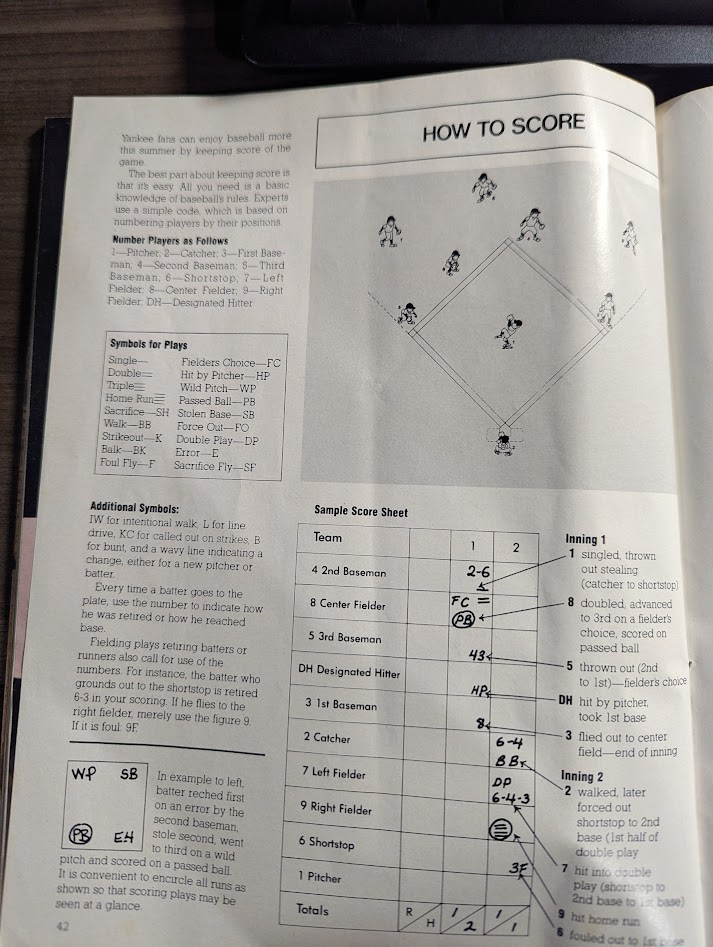
Why do people like us keep score?
In the old National League, the 9-hole belonged to the pitcher, the guy who throws the first pitch of every play. This is the question that started every piece in the lineup.
The MLB app tracks every pitch. The box score is live during the game and permanent after it. Nobody needs the card. My grandfather kept it anyway. So do I. So do you, in whatever form your card takes. The answer is one sentence with two readings.
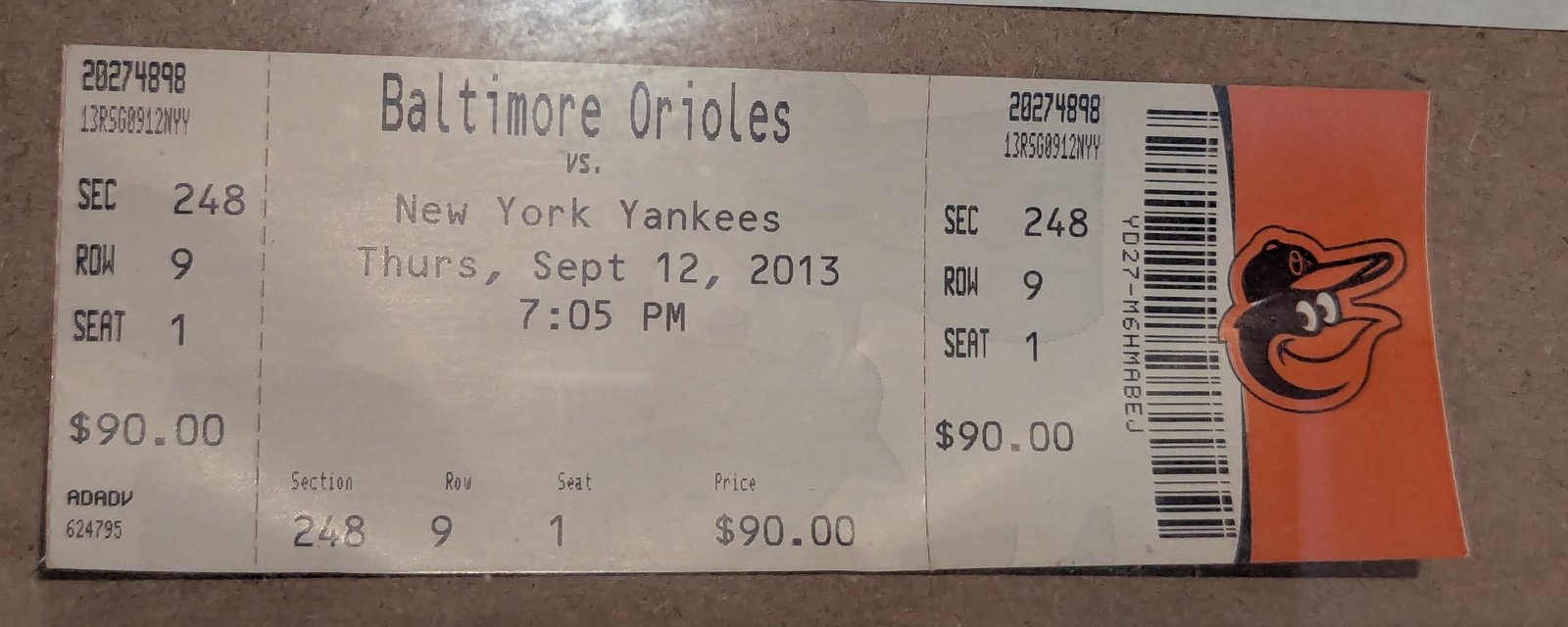
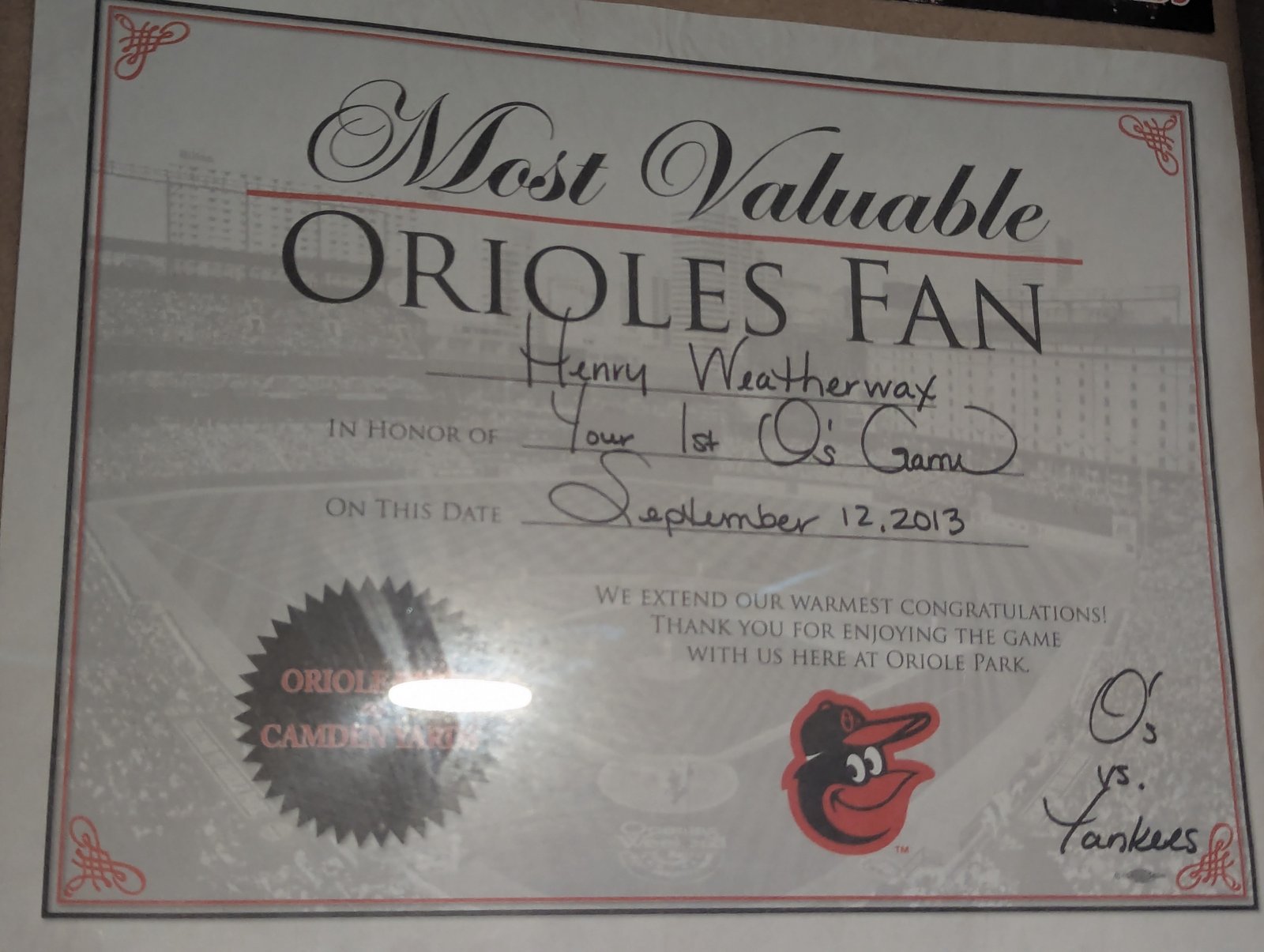
The game. Thursday, September 12, 2013. Camden Yards. Henry's first game, and my first as a dad. Mariano's last season. I bought the scorecard and never filled it in. Henry was a month old; the hands were busy. Pictures and a ticket. Robertson gave up a three-run homer that tied it in the eighth. The Yankees went ahead in the ninth on a wild pitch, an unearned run, while Robertson was still the pitcher of record. By the usual rule, the win was his. The official scorer gave it to Mo, who went 1-2-3. The rulebook had an answer. The person who knew what the game meant made a different call, and wrote it down.
#Because the question was always ours
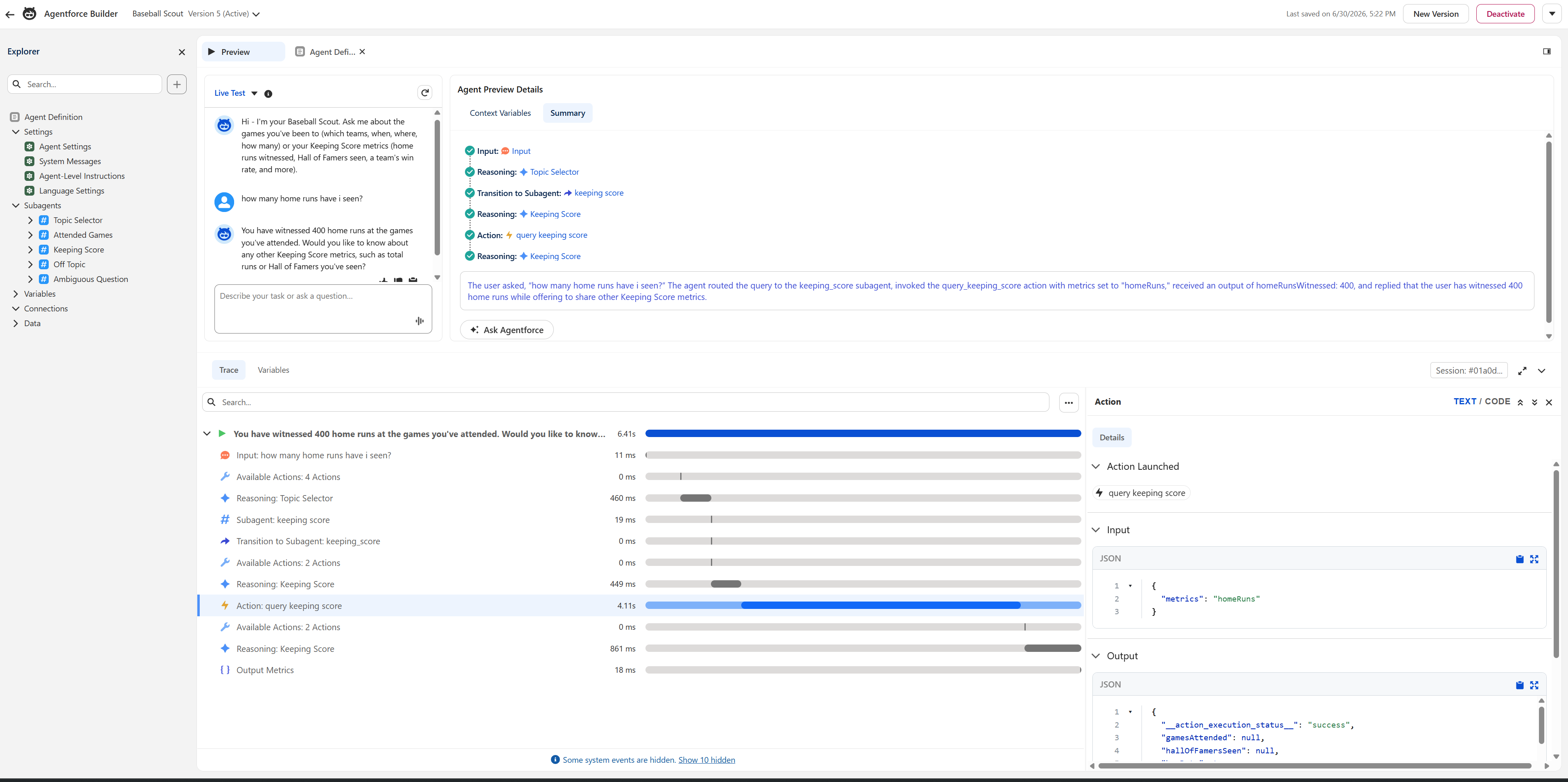
Here is what you were told this year. The future is agents, semantic layers, and something called context, and the person who spent a career knowing what the numbers mean is somewhere between legacy and liability. Here is what the lineup measured instead. Every wrong answer an agent gave in this run, the 9 and the 0% and the confident zero and the 281, was fixed by someone who knew what the data meant. A person writing down what a home run is, who “I” refers to, which joins count, when the tool must fire.
That knowledge didn't leave. It moved. Out of the workbook and into the metric definition. Out of the filter shelf and into the business preferences on the model. Out of your head during QA and into the gate the agent can't skip. Out of “trust me” and into the trace. Those are the four places a career's worth of knowing goes in an agentic stack, and every one of them is upstream of every tool the vendors are selling. Tableau to semantic asset.
So the metaphorical answer: people like us keep score because the record is the craft. The insisting that the number be right, be the same everywhere, and be traceable to something that happened, that's the job, whatever the tool.
#Because no app knows who you went with
And the literal answer, which is mine. The box score knows Mattingly homered in the third on June 10, 1984. It doesn't know Roger was there, or that it was Bat Day, or that a five-year-old had “1st” circled above his name by the man who taught him the marks. No app puts an asterisk on the catch you want to remember; it links to the video, and that isn't the same. No app knows Melissa has been to 57 of these, or that Poppa kept the card at fourteen, or that Al, Bergan and Matty were back together on Old-Timers' Day.
The card holds what happened to you. That's the difference between data and a record. 178 rows is demo scale, and I say so. What isn't demo scale is that every row is an afternoon someone in my family sat through and wrote down, and the entire stack, six engines and six agents and a harness that diffs them, exists to make sure nothing downstream ever invents a play that wasn't on the card.
Both answers are the same sentence. People like us keep score because we were there, and we want the record to say so, correctly, in a form that outlasts the tool it was kept in. Pencil outlasted the tracking app. The spreadsheet outlasted the app after that. The definitions will outlast whichever of these six engines your org picks. Same questions. New tools.
#From the shoebox

#What to carry out of the park
- Your knowledge of what the data means is the scarce asset. Every fix in this run was that knowledge, written down somewhere a tool could read. Find those four places in your stack and put it there.
- Ask every agent the same question, and read the trace. The query it ran and the model it named. If you can't see those, you're being asked to QA blind, and you should say so.
- Keep your card. Whatever it is. The one place where what happened is written down by someone who was there and cared whether it was right. Every governed layer is trying to be that. Yours already is.
This site, and every build behind it, was made with Claude Code. Every call was mine.
That's the game. Back to the game notes · the lineup →